Last week, a clam video went viral. (Get your mind out of the gutter, internet! I mean a bivalve! A mollusc! A lamellibranch!) For people who know how clams actually live, the misconceptions of this video are obvious. That’s not the clam’s tongue, that’s its foot. The clam is trying to use its foot to . . . → Read More: Secrets of the clam tongue: a case study in opportunistic science outreach
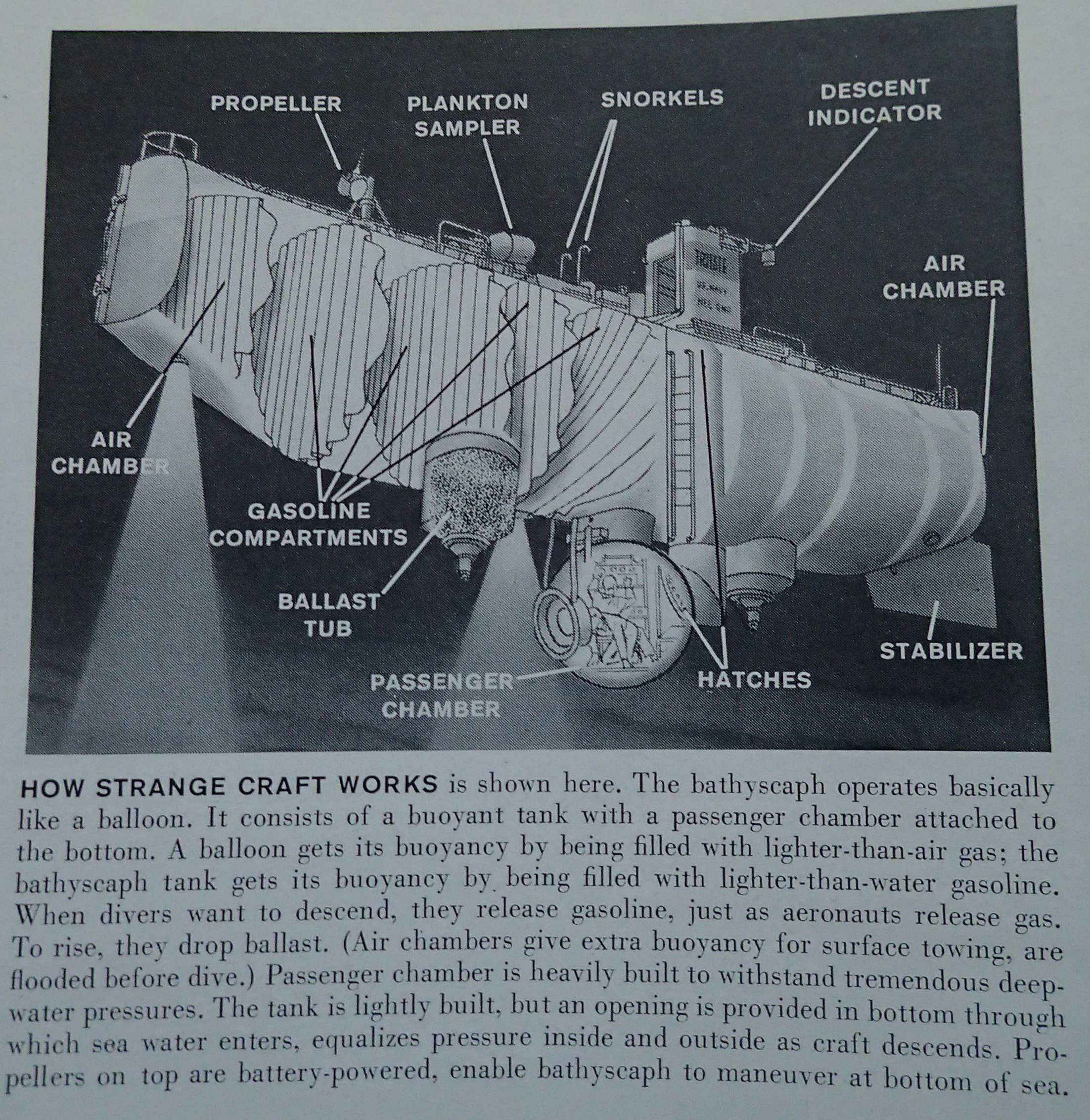
By Dr. M, on  June 19th, 2012 Expeditions, Gadgets & Gear, Life At Sea, Scientist!, Social Sciences, Vessels and Equipment Challenger Deep, Don Walsh, marianas trench, submersible, Trieste, US Navy Bathyscaphe Trieste I asked, “What were the events that lead to you to dive the Marianas Trench?” Don Walsh one of two men to first visit the deepest point of the world’s ocean and one of only three to succeed at this responded quickly. “I found myself there for all the wrong reasons.” Don Walsh . . . → Read More: I Am Science with the First Man to Dive Challenger Deep
By para_sight, on  June 5th, 2012 Ecology, Fish, Gadgets & Gear, Scientist!, Vessels and Equipment argos, satellite data, satellite tag, satellite tracking, satellites, tagging, turtles, whale sharks, whales If you’re at all interested in charismatic megafauna (it’s OK, embrace the shame), then you’ve probably heard of satellite tagging before. This is the idea that you can attach a small device to some species of interest and follow its progress and know its location without actually having to be able to see it all . . . → Read More: Fishy phone home
View from Scripps library, by daniel_clark I’m disappointed to report that the Scripps Institution of Oceanography library will shut down this summer. After I reported the library’s potential closure last year, many of you express shock and dismay at losing this amazing resource – but unfortunately California’s budget woes have triumphed. From Mike Lee’s article . . . → Read More: Scripps oceanographic library will shut down
Guys….I have an embarrassing confession. Sometimes I think marine mammals are really cute, and want to hug them. I KNOW, I can’t believe I’m actually admitting this on the internet – but it’s true. There’s a reason that this shocking confession is coming to light now, and his video is below. There’s a naming contest . . . → Read More: Name a baby fur seal at New England Aquarium
By Dr. M, on  May 23rd, 2012 Education, Opinion & Editorial, Scientist!, Uncategorized biological supply, collection, dissection, fish, hoax, Museum, specimen, theft On May 4th a colleague of mine, Dr. Brian Sidlauskas, curator for the fish collection of Oregon State University, received this email. Respected Prdf. Brian; On most humanitarian ground, would you please be so kind to provide me 25 Preserved MYXINE /EPTATRETUS sps. ;Hag-fish; Size Range 10″-15″ ,7 Petromyzon marinus ,and 15 Sub-Adult of HYDROLAGUS . . . → Read More: Robbing Museums
Remember the Hoff Crab? You bet your bippy you do. You can thank Nicolai Roterman for that. Nicolai, a hydrothermal vent biologist and a member of the expedition that found this hairy crab, coined the name Hoff Crab while still on board. To commemorate this very special event Nicolai’s sister watercolored the specimen caught on . . . → Read More: Hoff Crab + Tattoo = Awesomsauce
You might have seen the headlines last week: Big rise in North Pacific plastic waste, Plastic in ‘Great Pacific Garbage Patch’ increases 100-fold, Ocean Trash is a Lifesaver for Insects, and so forth. These were based on a paper that I wrote with two co-authors, which came out in Biology Letters last week. Because . . . → Read More: Pacific plastic, sea skaters, and the media: behind the scenes of my recent paper
I cannot say it any better than Jai and Jarrett so in their own words The #SciFund Challenge is an experiment – can scientists use crowdfunding to fund their research? The current rate of funding for science proposals in the U.S. is ~20%. The current rate for crowdfunding statues of RoboCop in Detroit is 135% . . . → Read More: SciFund Challenge: The Aquatic Projects
An example of one of the many species that inhabit the deep sea. Unlike this cephalopod many still await discovery. Gonatus fabricii swims by the PISCES V submersible during dive P5-625 New Zealand, Kermadec Arc Date 4 May 2005 Source NOAA Photo Library Author New Zealand-American Submarine Ring of Fire 2005 Exploration; NOAA Vents Program . . . → Read More: 10 Reasons Why We Should Explore The Deep
|
|
Recent Comments