By Dr. M, on  June 2nd, 2013 Biology, Conservation & Environment, Ecology, Fishing, Organisms, Pelagic birds, Carbon, food web, hawaii, isotope, Nitrogen, Overfishing, petrels, trophic Hawaiian Petrel. Photo from Jim Denny on Flickr. Meet The Hawaiian Petrel (or ʻUaʻu or Pterodroma sandwichensis) a bird species endemic to the Hawaiian Islands but with an appetite causing it to dine on squids, fish, and crustaceans from around the Pacific. A single individual may take off on a 10,000 kilometer (>6,000 mile) trip . . . → Read More: An overfishing story told by bird collagen
By Dr. M, on  December 21st, 2011 Adaptations, Climate Change, Ecology, Environmental Sciences, New Research, Organisms, Uncategorized beta diversity, Carbon, deep sea, diversity, flux, marine snow Oh the dark deep sea is frightful, But the food not so delightful, But since we’ve got no place to go, Let It Marine Snow! Let It Marine Snow! Let It Marine Snow! The deep-sea floor is a patch mosaic of habitats In the late 1960’s, two marine biologists, Howard Sanders and Robert Hessler, . . . → Read More: Let It Snow, Let It Snow, Let It Snow
By Archie Teuthis, on  January 15th, 2011 Adaptations, Biology, Conservation & Environment, Ecology, Environmental Sciences, Evolution, Geology, Organisms, Paleobiology, Scientist! Carbon, diatom, frustules, phytoplankton, Scientist In Residence Dear Diatoms, You are pretty, and I like you. Haeckel liked you too, so did Gaudi. Obviously, they appreciated the little things in life. While you still make appearances now and again in modern life, let’s face it: being microscopic and aquatic, recognition is an up-current battle, and you can’t swim. Perhaps obscurity suits you? . . . → Read More: Scientist In Residence: Danny Richter on the To Humble Diatom
By Dr. M, on  December 15th, 2010 Environmental Sciences, Geology, New Research, Seeps, Vent, & Whale Falls Carbon, carbon cycling, carbon sequestration, Geology, Hydrothermal Vent, magma, ridge, sill, Spreading Center, volcanism I’m a contrarian. Majority consensus makes me shudder. I just like rooting for underdogs*. Those undersea ridges at the boundaries of tectonic plates, spewing molten magma to form new crust are o’ so popular these days. Spreading plate boundaries…meh. What I do like is new research basically stating, and I am paraphrasing here, that spreading . . . → Read More: I Like Sills But Not A Fan Of The Popular Or My Friend’s Ex
By Dr. M, on  August 1st, 2010 Conservation & Environment, Coral, Ecology, Environmental Sciences, New Research, Organisms, Social Sciences 'Oro, ahu, architecture, Biomass, Carbon, chlorophyll, climate change, Coral, flux, global warming, Gulf of Mexico, marae, Mo'orea, phytoplankton, POC, Polynesia, SST, The Tide Pool, Thorium An occasional series where we briefly report 3 new studies and tell you why they are cool! A new paper by Boyce, Lewis, and Worm from Dalhousie University, provides clear evidence of decreasing phytoplankton biomass over the last century. The researchers used a blended dataset of ~450,000 measurements of chlorophyll consisting of field measurements of . . . → Read More: The Tide Pool: Loss of Phytoplankton, War Gods and Corals, and Gulf of Mexico Biodiversity
By Kevin Zelnio, on  July 15th, 2010 Adaptations, New Research Anemone, Aptasia, Autotrophy, Best of Zelnio, Carbon, Heterotrophy, Mixotrophy, Pulse-Chase Experiment, radiocarbon, Symbiosis, Zooxanthellae It has been known for a long time that some anemones form symbiotic relationships with Zooxanthellae. For a while it was assumed that the anemones mainly persisted by utilizing carbon translocated from its symbionts, called autotrophy, but they can may supplement this by heterotrophic feeding on plankton. A study by Bachar and colleagues followed . . . → Read More: Determining the Fate of Carbon in a Mixotrophic Anemone
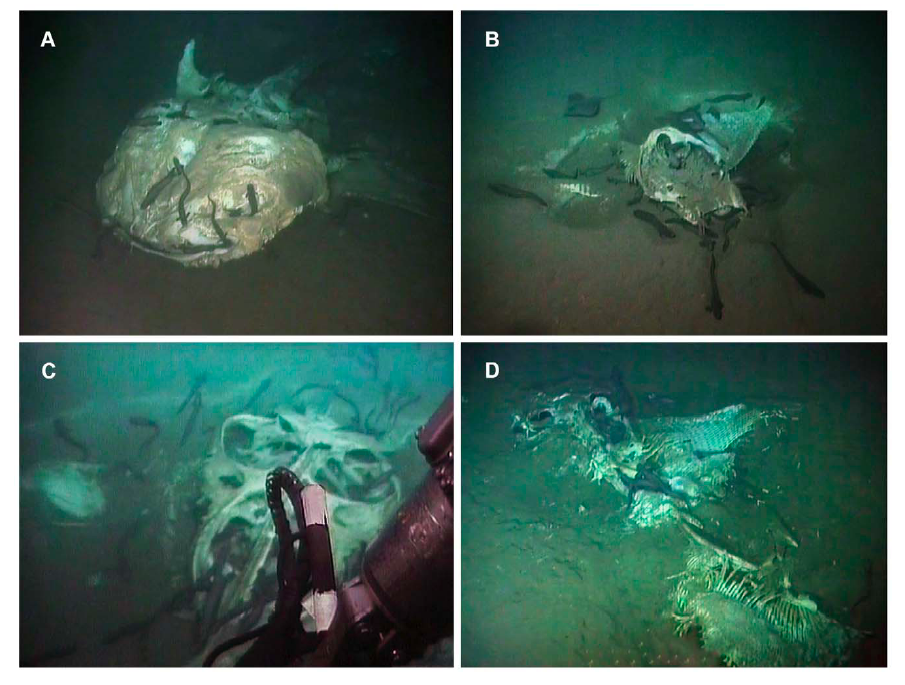
By Kevin Zelnio, on  March 6th, 2010 Conservation & Environment, Organisms, Seeps, Vent, & Whale Falls bone, Bone Worm, Carbon, deep sea, Nutrient Cycling, Osedax, whale, Whale Fall There is a disturbing trend in this BBC news article about the relationship between whaling and carbon. The report comes from a talk at The Ocean Science meeting in Portland last week discussing some calculations presented by Dr. Andrew Pershing on how whaling is putting “locked up” carbon back into the atmosphere. “Whales, like any . . . → Read More: Won’t They Think of the Poor Bone-Eating Worms?
By Kevin Zelnio, on  February 7th, 2010 Ecology, Expeditions algae, Antarctica, Carbon, David Honig, Diet, LARISSA, Primary Production, R/V Nathaniel B. Palmer, sea ice, Stable Isotopes David Honig is a graduate student in marine science at Duke University in the lab of Dr. Cindy Van Dover. He is participating in LARISSA, a 2 month multinational expedition to study the causes and consequences of the ice shelf collapse. He will be posting regular updates on the expedition exclusively for Deep Sea News . . . → Read More: Dispatches from Antarctica – Sampling the Inverted Benthos
By Dr. M, on  January 18th, 2010 Ecology, New Research, Seeps, Vent, & Whale Falls active gas seepage, Carbon, carbonate, Chemoautotrophy, Coral, deep sea, energy, food chains, gas, Gulf of Mexico, Lophelia pertusa, Methane Seeps, Nitrogen, oil, Open Lab 2009, Provanna Sculpta, Stable Isotopes, sulfur, Trophic Ecology This is a repost of KZ’s winning post for Open Laboratory 2009: The Best Science Writing on the Web. Congrats to KZ! ———————————————————————————————————— This is a tale of cause and effect in the deep sea woven by threads of hypotheses held together by the loom of targeted sampling efforts and multiple lines of evidence. You . . . → Read More: Repost: Deep-Sea Corals and Methane Seeps
By Kevin Zelnio, on  July 25th, 2009 Uncategorized active gas seepage, Best of Zelnio, Carbon, Coral, Ecology, energy source, food chains, Gulf of Mexico, Lophelia, methane, Methane Seep, Nitrogen, Provanna, seep, Stable Isotope, sulfur, trophic level This is a tale of cause and effect in the deep sea woven by threads of hypotheses held together by the loom of targeted sampling efforts and multiple lines of evidence. You see, dear readers, once upon a time existed an observation. Hovland (1989) noticed along the Norwegian coastline that carbonate reefs occurred in . . . → Read More: Deep Sea Corals and Methane Seeps
|
|
Recent Comments