This ice crack is whack.
This ice crack is whack. avatar

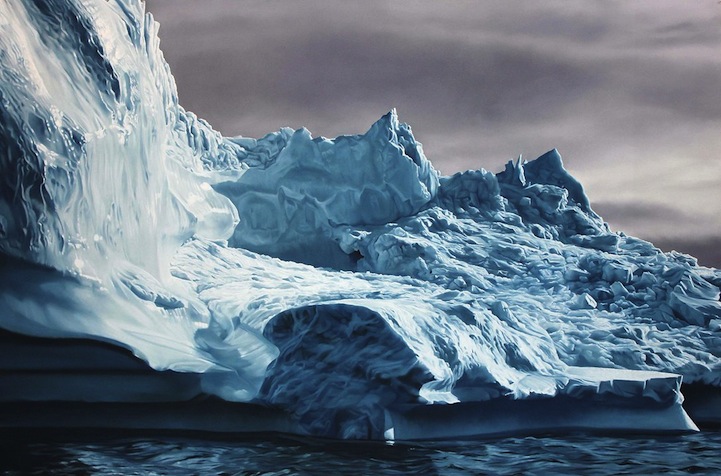
Kids, we all know that crack is bad for your body. And when it comes to sea ice, the same policy applies. Too much crack is whack. Starting in mid-February a bunch of giant cracks in sea ice, or leads, began forming in the Beaufort Sea. Now a couple of leads are not unusual, but . . . → Read More: This ice crack is whack.

This ice crack is whack. avatar

Notes from the field: Find the currents, deploy the ROBOTS!
Notes from the field: Find the currents, deploy the ROBOTS! avatar

We’re excited for another guest post from Kim Martini here at DSN (read previous posts here). Kim is a physical oceanographer working at the University of Alaska, Fairbanks. She is part of a science team in the Arctic for a two-week cruise to study the currents in the Chukchi Sea. You can find her on . . . → Read More: Notes from the field: Find the currents, deploy the ROBOTS!

Notes from the field: Find the currents, deploy the ROBOTS! avatar

How microscopic plankton explain the opening of the Northwest Passage
How microscopic plankton explain the opening of the Northwest Passage avatar

For centuries, mariners sought the Northwest Passage, a route through the Canadian ice that connected the North Atlantic and North Pacific oceans. Today, the Arctic ice has melted so much that the Northwest Passage exists – there’s already multinational wrangling over shipping rights. Why is the Arctic melting so fast? There are a number . . . → Read More: How microscopic plankton explain the opening of the Northwest Passage

How microscopic plankton explain the opening of the Northwest Passage avatar

EU Clashes with Greenland over Arctic
EU Clashes with Greenland over Arctic avatar

Is the EU trying to off oil competitors or is there real concern on protecting the Arctic ecosystem? via EU clashes with Greenland over international stewardship of Arctic | Environment | guardian.co.uk.

Ocean Warming Melts Methane Hydrates Which Screws Us All
Ocean Warming Melts Methane Hydrates Which Screws Us All avatar

That’s pretty much the message of new study in Geophysical Research Letters. Large deposits of methane hydrates, i.e. methane ice, occur naturally in the seafloor sediments of the Arctic continental shelf between 300-600 meters. This is dominate reservoir for methane due to the large area and extremely low temperatures. The continued and predicted warming of . . . → Read More: Ocean Warming Melts Methane Hydrates Which Screws Us All

Ocean Warming Melts Methane Hydrates Which Screws Us All avatar

Once Again, I Called It
Once Again, I Called It avatar

Like I said, the Great Alaskan Blob was Palin algae. Preliminary results indicate that it doesn’t look toxic. See Time Magazine: “Algae blooms,” she says. “It’s sort of like a swimming pool that hasn’t been cleaned in a while.” The blob, Konar said, is a microalgae made up of “billions and billions of individuals.” “We’ve . . . → Read More: Once Again, I Called It

Once Again, I Called It avatar

“… some sort of naturally occurring organic or otherwise marine organism.”
“… some sort of naturally occurring organic or otherwise marine organism.” avatar

Those were the words echoed by U.S. Coast Guard Petty Officer 1st Class Terry Hasenauer, in reference to a strange substance floating in the Arctic near Alaska. ” The stuff is “gooey” and looks dark against the bright white ice floating in the Arctic Ocean, Brower said. “It’s pitch black when it hits ice and . . . → Read More: “… some sort of naturally occurring organic or otherwise marine organism.”

“… some sort of naturally occurring organic or otherwise marine organism.” avatar

UK Launches Bold Ocean Acidification Research Program
UK Launches Bold Ocean Acidification Research Program avatar

Way to go brits! The BBC reports: “The UK government has launched an £11m ($16m) five-year research programme into ocean acidification… The study will focus on the Atlantic, Antarctic and Arctic oceans and assess how marine ecosystems are affected. The programme, co-funded by the Department for Environment, Food and Rural Affairs (Defra) and the Natural . . . → Read More: UK Launches Bold Ocean Acidification Research Program

UK Launches Bold Ocean Acidification Research Program avatar

Global Ocean Exploration’s new website
Global Ocean Exploration’s new website avatar

Last week I posted an article about consulting for the marine sciences as a follow up to Craig’s story “how to be a deep-sea biologist“. If some of you are still scratching your heads about what’s possible as a consultant, check out Gaelin Rosenwaks’ new website for her consulting company Global Ocean Exploration. The . . . → Read More: Global Ocean Exploration’s new website

Global Ocean Exploration’s new website avatar

Bi-polar Invertebrata-ta
Bi-polar Invertebrata-ta avatar

Two oceans couldn’t be farther apart. The Arctic and Antarctic Oceans have about 160 degrees of separation but Census of Marine Life scientists say they share more than 235 species in common. Most of them are not actively migratory fishes and birds, instead they are passively migratory invertebrates like the sea cucumber and sea butterfly . . . → Read More: Bi-polar Invertebrata-ta

Bi-polar Invertebrata-ta avatar