Are humans and reefs sharks mutually exclusive?
Are humans and reefs sharks mutually exclusive? avatar

A paper by Marc Nadon and colleagues from  U. Hawaii and U Miami RSMAS has been getting a good bit of press lately (see here and here and here), and rightly so, it’s an interesting and important subject.  They studied populations of reef sharks in the Pacific and attempted to reconstruct what the “starting” populations . . . → Read More: Are humans and reefs sharks mutually exclusive?

Are humans and reefs sharks mutually exclusive? avatar

TGIF – Pretty pictures from Okeanos Explorer
TGIF – Pretty pictures from Okeanos Explorer avatar

This week the NOAA ship Okeanos Explorer has been dropping its ROV Little Hercules onto various features in the northern Gulf of Mexico, including an old wood/iron wreck, salt domes and man-made seismic trenches.  Okeanos has an interesting remote arrangement where folks back on the continent can direct the ROV pilots in real time by . . . → Read More: TGIF – Pretty pictures from Okeanos Explorer

TGIF – Pretty pictures from Okeanos Explorer avatar

A Lonely Tree Far From Home Brings New Life to the Ocean Deep: A Narrative in Five Acts
A Lonely Tree Far From Home Brings New Life to the Ocean Deep: A Narrative in Five Acts avatar

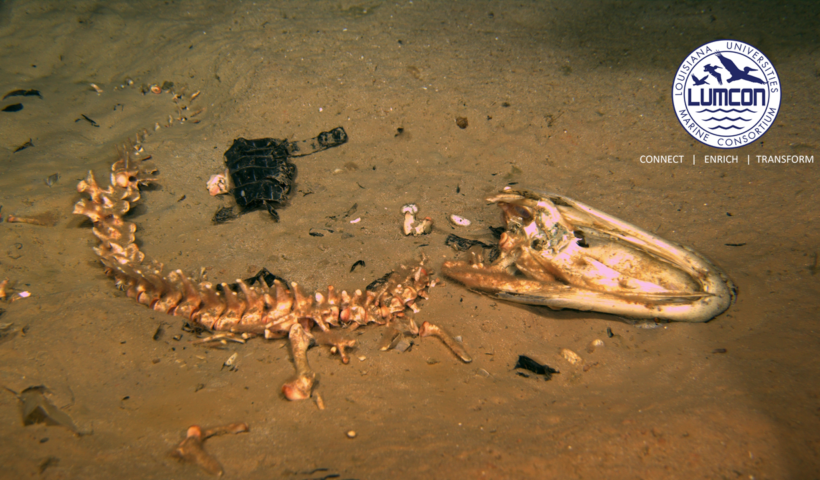
Act 1: Wood Falling on Water At two miles below the ocean’s surface, I see wooden carcasses, once buoyant, lying listlessly on the abyssal seafloor. They range from small fragments to 2000+ pound behemoths.  Ligneous cadavers litter the seafloor, a last resting place for visitors from a faraway and drier place, becoming rare as . . . → Read More: A Lonely Tree Far From Home Brings New Life to the Ocean Deep: A Narrative in Five Acts

A Lonely Tree Far From Home Brings New Life to the Ocean Deep: A Narrative in Five Acts avatar

Turf wars
Turf wars avatar

Battle lines are drawn and chemical warfare commences between alga (left) and coral (right). Img: Jennifer Smith I was lucky enough to attend an all-day workshop today, just down the road at Georgia Tech, where Prof. Mark Hay organised the Teasley Symposium on the interactions between corals and seaweeds on reefs.   Like many, I was . . . → Read More: Turf wars

Turf wars avatar

Shouldn’t We Be More Skeptical of the DeepChallenger Dive?
Shouldn’t We Be More Skeptical of the DeepChallenger Dive? avatar

This is an invited contribution.  A marine biologist, who posts here under the pseudonym, Dour Marine Biologist, offers a counter to the media and even DSN hype on Cameron’s dive.  I find these points below worth consideration and dialogue.  I want to hear your comments below. Since James Cameron’s record-breaking dive on March 26th the media . . . → Read More: Shouldn’t We Be More Skeptical of the DeepChallenger Dive?

Shouldn’t We Be More Skeptical of the DeepChallenger Dive? avatar

Okeanos Explorer in the Gulf of Mexico
Okeanos Explorer in the Gulf of Mexico avatar

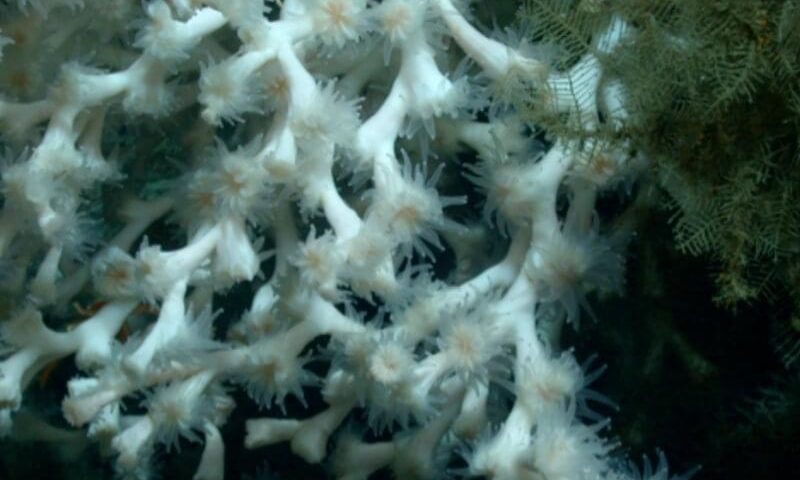
This is a time sensitive post.  By the time some find it, there may be nothing showing, but right now at 1155hrs EDSL, there’s a great feed from the Little Hercules ROV at the bottom of the Gulf of Mexico, looking at some deep corals See more here Broadcast Spawn!Tweet#call_to_action h4{padding:0px 5px;}This is a time . . . → Read More: Okeanos Explorer in the Gulf of Mexico

Okeanos Explorer in the Gulf of Mexico avatar

James Cameron And The Dawn Of DeepTruth?
James Cameron And The Dawn Of DeepTruth? avatar

Image on left: Seafloor Production Tool (SPT) that will be operated at a depth of 1600 meters off the coast of Papua New Guinea by Nautilus Minerals to extract copper and gold from high grade seafloor massive sulphide deposits. Image on Right: Computer generated Bucket-Wheel Excavator used to extract unobtanium from Pandora in James . . . → Read More: James Cameron And The Dawn Of DeepTruth?

James Cameron And The Dawn Of DeepTruth? avatar

Challenger Deep: What we can learn from a single, half core of mud
Challenger Deep: What we can learn from a single, half core of mud avatar

James Cameron’s descent to the Challenger Deep – we have adventure, intrigue, and a great story for the media. But we also have an amazing opportunity for SCIENCE! Despite a faulty hydraulics hampering sample collections, the Deepsea Challenger managed to grab half a sediment core – a cupful of muddy, watery ooze from the deepest . . . → Read More: Challenger Deep: What we can learn from a single, half core of mud

Challenger Deep: What we can learn from a single, half core of mud avatar

10 Reasons Why We Should Explore The Deep
10 Reasons Why We Should Explore The Deep avatar

An example of one of the many species that inhabit the deep sea. Unlike this cephalopod many still await discovery. Gonatus fabricii swims by the PISCES V submersible during dive P5-625 New Zealand, Kermadec Arc Date 4 May 2005 Source NOAA Photo Library Author New Zealand-American Submarine Ring of Fire 2005 Exploration; NOAA Vents Program . . . → Read More: 10 Reasons Why We Should Explore The Deep

10 Reasons Why We Should Explore The Deep avatar

Cool as a sea cucumber: life (and death) at extraordinary deep sea pressures
Cool as a sea cucumber: life (and death) at extraordinary deep sea pressures avatar

Edit – In the original article I said that the sphere of the Deep Challenger was made of titanium.  In fact, it’s made of steel.  My bad! In trying to explain to friends, colleagues and Twitter followers during recent days what James Cameron may have seen out that softball-sized window of the Deep Challenger submersible . . . → Read More: Cool as a sea cucumber: life (and death) at extraordinary deep sea pressures

Cool as a sea cucumber: life (and death) at extraordinary deep sea pressures avatar