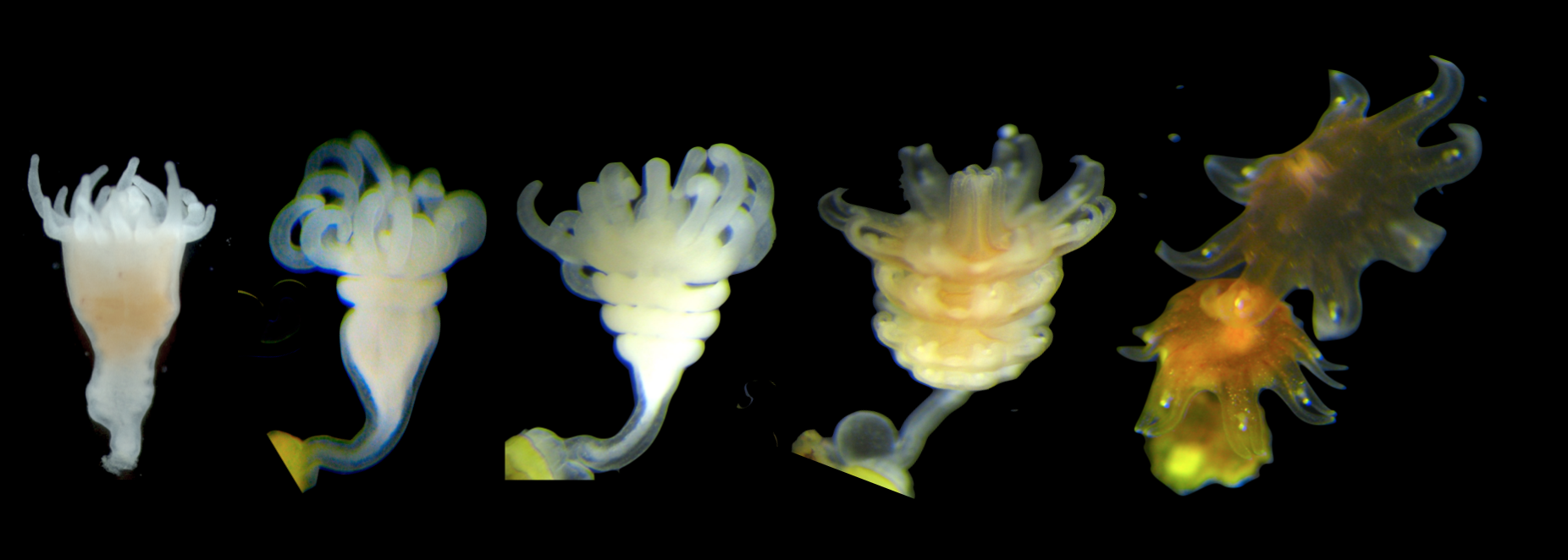
This image shows female Antillogorgia elisabethae with newly released eggs and developing planulae larvae. (Credit: Howard Lasker) You might be surprised to learn that an ingredient in some skin crèmes is coral, or more accurately coral extract. More specifically, Pseudopterosin A is a topical anti-inflammatory agent derived from the sea whip Pseudopterogorgia elisabethae and often . . . → Read More: By trying to look sexier you may be ruining sex for corals.
By Dr. M, on  December 18th, 2012 Conservation & Environment, Ecology, Industry & Government, New Research, Oil Spills, Organisms, Scientist! Daniel Jones, Disturbance, Drilling, offshore drilling, oil, SERPENT This is Guest Post from Dr. Daniel Jones a deep-sea biologist with the National Oceanography Centre in the United Kingdom and Project Coordinator for SERPENT (described below). Dan research focuses on how organisms in the deep sea are impacted by both natural and human disturbances. Drilling for oil is far from rare, even in deep . . . → Read More: Can Beasts of the Deep Survive the Impact of Drilling for Oil?
By Dr. M, on  December 18th, 2012 Adaptations, Ecology, Fish beetle, deep sea, Diet, fish, food limitation, insect, New Zealand, weevil #gallery-1 { margin: auto; } #gallery-1 .gallery-item { float: left; margin-top: 10px; text-align: center; width: 33%; } #gallery-1 img { border: 2px solid #cfcfcf; } #gallery-1 .gallery-caption { margin-left: 0; } Dark Ghost Shark Jock Stewart Silverside In January 2004, Mathew Jones was processing the bycatch from New Zealand lobster stock assessment. Six fish . . . → Read More: The unusual diet of deep-sea fish
By Kevin Zelnio, on  December 11th, 2012 Adaptations, Climate Change, Ecology, New Research, Scientist! California, climate change, Coastal, Ecology, mussel, oyster, Research, Sea Star, starfish, University of California Was just sent these great informative short videos about research being done to understand how climate change affects coastal communities. Coastal organisms live in areas with much day to day variation. There are the changing tides, the amount sun exposure, and also shade from tidal zone seaweeds and rock crevices. This makes coastal animals, like . . . → Read More: California Coastal Climate Change Research
Big tip ‘o the hat to @RebeccaRHelm on Twitter for sharing this beautiful video with great music on it. Make sure you stick with the video to about 2/3′s of the way through to see what happens to the jelly! Video information: United States Antarctic Program divers, Henry Kaiser and Rob Robbins, both videotape . . . → Read More: Beneath Antarctic Ice: Gelatinous Edition
By para_sight, on  October 31st, 2012 Adaptations, Evolution, Fish, Organisms, Weird abyssal, anglerfish, deep sea fishes, fear, fishes, halloween, loosejaw, marine biology, phobia, spiders, Viperfish I was going to do a “demons of the deep” post for Halloween but as I was considering which animals to include I had to stop and ask myself what this was really all about and it took me in a slightly different direction, viz: Consider the viper fish with its capacious maw and manifold . . . → Read More: Is this fish evil?
What if your physical characteristics (hair color, height, or eye color) were determined by your bacterial microbiome? It might seem far fetched for humans, but for some marine species, this is a fact of life. We recently had a foreign emissary visit the lab, one Catherine Burke from the University of Technology in Sydney, Australia. . . . → Read More: Algal blobs take shape, thanks to bacteria
On the winner goes the Rough Periwinkle (Littorina saxatilis) from the North Atlantic (both sides of the pond) On average, each clutch of 70 offspring had 19 fathers between them. Larger clutches had more…Males track females by following their mucus trails, and will attempt to mate with pretty much any snail they encounter, regardless of . . . → Read More: The world’s most promiscuous snail
In a remarkable turnaround, Craig directed me to a very cool new study about manta rays (next thing you know I’ll be sending HIM papers about energy availability in the deep sea…). In it, the authors use the birth of a baby Manta alfredi in the Chaurami Aquarium in Japan to study these largest and . . . → Read More: Ever seen a manta ray’s bellybutton?
Brittle stars, a sea pen, and sea cucumber dealing with the lack of energy on the deep-sea floor. Photo courtesy of MBARI If energy is the currency of life then deep-sea organisms are in a long-term recession. Energy comes in three major forms important for life: solar radiation in the form of photons, thermal kinetic . . . → Read More: The Great Recession of the Deep Oceans
|
|
Recent Comments