By Dr. M, on  May 10th, 2012 Adaptations, Biodiversity, Evolution, Uncategorized brittle start, echinoderm, gait, symetry, tube feet, walking Unlike their Echinoderm brethren, brittle stars do not move along on tube feet that can propel them in any direction. Instead, brittle stars ‘walk’. This mode of movement by brittle stars is even more astonishing when it is considered that brittle stars, like all echinoderms, are not bilaterally symmetrical, i.e mirror imaged halves. All echinoderms . . . → Read More: These Arms Were Made For Walking
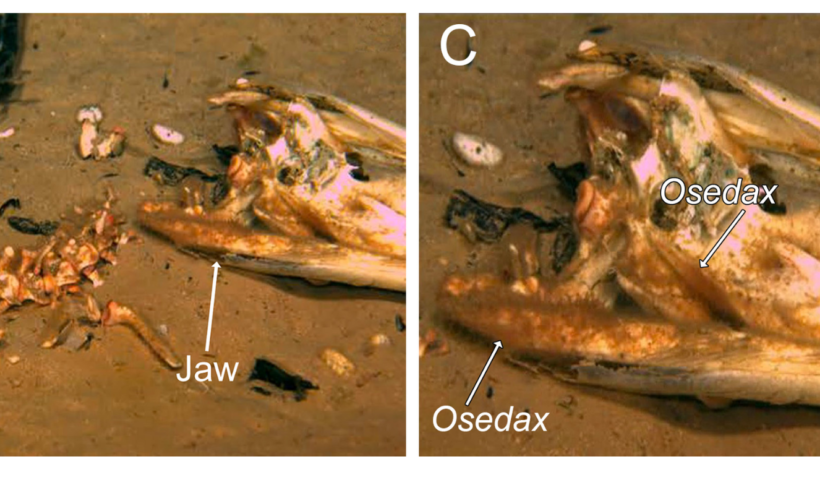
By Dr. M, on  April 27th, 2012 Adaptations, Biodiversity, Critters, Ecology, Evolution, Expeditions, New Research, New Species endosymbiotic bacteria, lumber, Squat Lobster, timber, tree, Wood, woodfall, Xylophaga, Xyloplax Act 1: Wood Falling on Water At two miles below the ocean’s surface, I see wooden carcasses, once buoyant, lying listlessly on the abyssal seafloor. They range from small fragments to 2000+ pound behemoths. Ligneous cadavers litter the seafloor, a last resting place for visitors from a faraway and drier place, becoming rare as . . . → Read More: A Lonely Tree Far From Home Brings New Life to the Ocean Deep: A Narrative in Five Acts
From the Barber lab at UCLA comes this awesome video. Not only can they sing better than most biologists, but the lyrics are great! I especially liked the line about not caring about income, just wanting to discover stuff. I feel ya… Hat tip to @neillosin on Twitter Broadcast Spawn!Tweet#call_to_action h4{padding:0px 5px;}From the Barber lab . . . → Read More: TGIF – the coral triangle, a-capella style!
By Kevin Zelnio, on  March 20th, 2012 Adaptations, Evolution, Paleobiology Echinodermata, echinoderms, Evolutionary History, fossil, Madreporite, Phylogeny, Radial Symmetry, Water Vascular System, Xyloplax Graphic used with permission. Daniel D. Brown, LaughingMantis.com. Echinoderms are one of the most highly derived groups of animals with many species as significant components of several marine communities. They’re classified by three fundamental shared characteristics: 1) pentaradial symmetry, 2) skeleton made of three-dimensional calcitic elements, and 3) the presence of a water . . . → Read More: Veins of Water: The Evolution of the Echinoderm Water-Vascular System
By Dr. M, on  March 9th, 2012 Adaptations, Biodiversity, Ecology, Environmental Sciences, Evolution, Geology, Mating & Reproduction, New Research, Paleobiology, Seeps, Vent, & Whale Falls We as humans have three fundamental questions. Where do we come from? Where are we going? Are we alone in the universe? The answers to these thrust at the core of our humanity and uniqueness. Through science we seek out replies to these inquiries. The Drake Equation In 1960 the National Academy of Sciences asked . . . → Read More: What knowledge of the deep sea tell us about life on other planets
By Dr. M, on  March 1st, 2012 Biodiversity, Conservation & Environment, Critters, Dumping, Ecology, Evolution, Fish, Megavertebrate Auklet, eating, Humpback, King Cake, krill, Mardi Gras, Predation, shark, stomach contents, Tiger Shark, whale With Mardi Gras recently passing, I was privileged to partake of a King Cake graciously offered by a coworker. Originally European in tradition, the riche brioche-style cake is now also popular along the Gulf coast. King Cakes are recognizable from nearly 3 miles away by the patches of green, purple, and gold sugar that top . . . → Read More: What’s In Your Stomach?
[View the story "Darwin Day Road Show: Day 4" on Storify] Broadcast Spawn!Tweet#call_to_action h4{padding:0px 5px;}[View the story "Darwin Day Road Show: Day 4" on Storify] Broadcast Spawn!Tweet
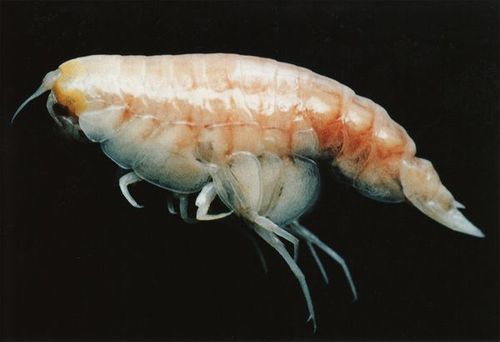
By Dr. M, on  February 12th, 2012 Adaptations, Biodiversity, Critters, Ecology, Evolution, Giant Isopod Alicella gigantea, Amphipod, body size, deep sea, Edouard Chevreux, French, Gigantism, supergiant, Trench In 1899 a French zoologist named Edouard Chevreux with an inordinate fondness for crustaceans officially described two crustaceans from the deepest parts of the ocean. Over 100 hundred years later, scientists have collected less than two dozen specimens of this enigmatic shellfish, shocking given that is largest species of amphipod ever known. Within Crustacean . . . → Read More: The Large But Enigmatic Supergiant
I seem to develop these weird, unfounded hatreds of various things. For example: I hate blue dinnerware. Not every shade of blue dinnerware (I LOVE prussian blue glassware), but I severely dislike those particular gray-blue shades reminiscent of country Americana. I can’t explain it–the mere sight of plates like these makes me angry. I would . . . → Read More: I hate plants, but seagrasses are awesome
By para_sight, on  November 21st, 2011 Evolution, Megavertebrate, New Research Bioengineering, Caretta, Chelonia, georgia tech, locomotion, reptiles, sea turtles [This is a repost originally published at my old blog, DeepTypeFlow] A grain of sand represents many things to a baby turtle. While still within the egg, sand represents a roof over your head, protection from the desiccating sun and from predators, and a blanket to keep you warm and level until its your turn . . . → Read More: To see the world in a grain of sand – movement from a turtle hatchling’s perspective
|
|
Recent Comments