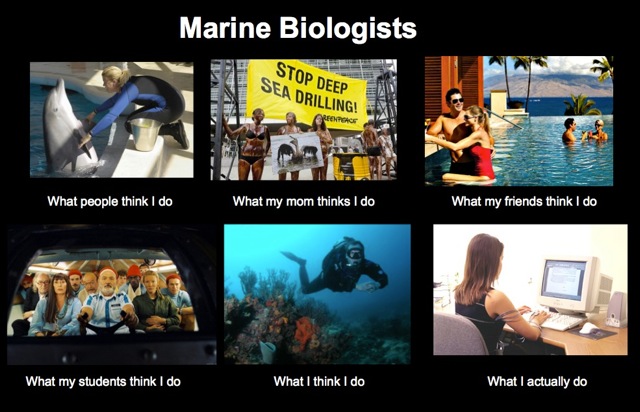
COMPASS recently published a commentary in PLOS Biology on the journey from science outreach to meaningful engagement. This post attempts to synthesize a series of reactions, reflections, and personal experiences that followed with the hope to expand the conversation. Read the summary post here, or track the conversation by searching for #reachingoutsci Image courtesy of . . . → Read More: Outreach, the academic formula, and the need for critical examination
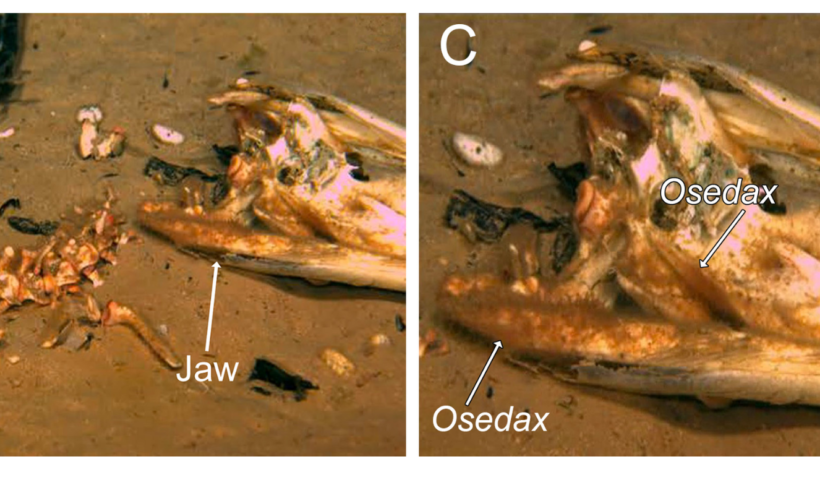
By Dr. M, on  May 2nd, 2013 Adaptations, Biology, Ecology, Mating & Reproduction, Organisms, Seeps, Vent, & Whale Falls, Weird The deep-sea Osedax bone-devouring worms could easily have been the poster child for Deep-Sea News instead of the Giant Squid. Below is list of 10 reasons why Osedax are the shiznit. The chicas are freaky. All whalebone-eating, female worms have dwarf males, up to 114 in Osedax rubiplumus, fruiting around inside of their body. The . . . → Read More: 10 Reasons Why Bone Eating Worms Are F’n Awesome
Can you smell that? Despite being spring it smells just a little less green. Indeed, there is a little less green around me. Sure the plants around me in North Carolina are in full emerald plumage. However the green that really matters—dollars, money, cash, currency, dough, bread, Benjamins, dough, bank, cabbage, chedda, dead presidents, folding . . . → Read More: A New Stereomicroscope for $440?
We asked Dr. Douglas J. Long, Senior Curator of Natural Sciences at the Oakland Museum of California to guest post with DSN. Please welcome him in the comments below. He holds a PhD in Integrative Biology from the University of California Berkeley, where his research focused on sharks. His current fieldwork utilizes data collected through . . . → Read More: Honor Your Heroes
In the below video a seasnake catches a moray eel at Giant Clam, Puerto Galera, Mindoro, Philippines. I believe the eel is a fimbriated moray, Gymnothorax fimbriatus which can reach lengths of of about 2.5 feet and apparently can make a fetching design for a dress. The sea snake appears to be the banded sea . . . → Read More: Seasnake vs. Moray Eel…not what I was expecting
When I’m chillin’ in my underwater low low, I want to attract attention. I can’t be doing that in some rusted out old tin can. Sequester and budget cuts be damned! Nope I going for the cheery red C-Explorer 5. Me and 4 of my posse (Alex, Holly, Kim and of course T-Pain, sorry Al . . . → Read More: Who do I pick to ride in my sub? Ice-Cube or T-Pain
By Dr. M, on  April 16th, 2013 Abyss, Biology, Organisms, Scientist!, Sharks deep sea, Jaguar Shark, life aquatic, species, species description, Steve Zissou, taxnomy We asked Dr. Douglas J. Long, Senior Curator of Natural Sciences at the Oakland Museum of California to guest post with DSN. Please welcome him in the comments below. He holds a PhD in Integrative Biology from the University of California Berkeley, where his research focused on sharks. His current fieldwork utilizes data collected through . . . → Read More: Not Quite the Shark that ate Esteban
David Aldridge is a phytoplankton-loving marine biology PhD student at the National Oceanography Centre in Southampton, UK. Also the founder and editor of Words in mOcean, a website dedicated to publishing blog posts and features on marine science. We’ve asked David to guest post for us here at DSN. Enjoy! Disclaimer: not everything in the . . . → Read More: Underfunded academic, seeking tenure, attempts to steal research ship
By Dr. M, on  April 8th, 2013 Adaptations, Biology, Intertidal, Mating & Reproduction, Mollusk, New Research, Organisms disposable, Ed Yong, hermaphrodite, love gun, Nudibranch, Penis, Sea Slug, ten hundred words There is not much to add to the whole story on disposable penises after Ed Yong wrote about it. So being a big fan of the Ten Hundred Most Used Words challenge (Can you explain a hard idea using only the ten hundred most used words?), I decided it was time I give it a . . . → Read More: Disposable Penises in Ten Hundred Most Used Words
FLIP is towed to its operating area in the horizontal position and through ballast changes is “flipped” to the vertical position to become a stable spar buoy with a draft of 300 feet. Photo from MPL. FLIP, the Floating Instrument Platform, is towed to an area in a horizontal position and through changing the ballast . . . → Read More: Flip Ship Photoshop Battle
|
|
Recent Comments