Number 6 on on my marine biology bucket list was to see the Colossal Squid Mesonychoteuthis hamiltoni. I mentioned in another post why I am so excited abou the Colossal Squid
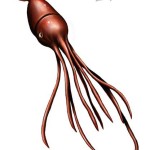
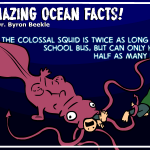
At half a ton this badass represents the largest invertebrate ever known. The Giant Squid is longer but not heavier. The Colossal Squid has hooks that run the length of its arms. It weighs a half ton and has hooked arms! The eye of the Colossal Squid is bigger than the Giant Squid. In fact the eye is the largest eye of any animal…The Colossal Squid can also cloak those eyes like a Klingon Bird of Prey. Did I mention hooks? So overall the Colossal Squid is the largest invertebrate on earth with special powers that stem from its large eyes, possesses stealth technology, and massive tentacles lined with razor-sharp hooks. The Giant Squid is the cute cuddly one.
However, the colossal squid may be a sluggish predator. Rosa and Seibel argue, based on some models of metabolism in other squids, that
“… the colossal squid is not a voracious predator capable of high-speed predator–prey interactions. It is, rather, an ambush or sit-and-float predator that uses the hooks on its arms and tentacles to ensnare prey that unwittingly approach.”
Of course when you have hooks for arms why not just sit and wait?
Steve O’Shea, expert of all big and squiddy, also noted from his dissection of the Te Papa specimen that as the female matures she gets shorter, broader, and more gelatinous. i.e. she get fat and lazy. Simply put she is a large gooey vessel for thousands of eggs. I think its a bit unfair to call her fat and lazy. She has simply chosen to invest her time and energy elsewhere. You try carrying thoudands of eggs and see how fat and lazy you become.
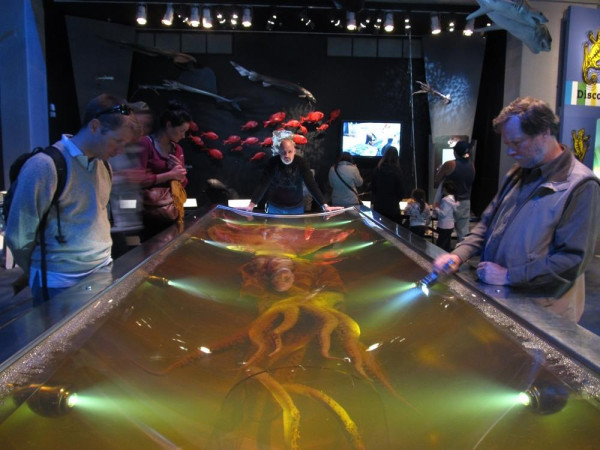
This all brings me around to more current events. The specimen housed in the Te Papa Museum in Wellington, New Zealand is the largest complete specimen of a Colossal Squid. The Colossal Squid has been known to the scientific community since 1925 when it was described from two arm crowns recovered from a sperm whale stomach at the Falkland Islands. Only nine specimens above juvenile size have been reported since 1925, none complete. In February 2007 the longlining vessel San Aspiring, fishing for Antarctic toothfish (Dissostichus mawsoni Norman) in the Ross Sea caught this 495kg (1091 lbs, 0.5 ton) adult specimen.
But the best part? The specimen is available for the public to see and I just happen to be in Wellington for the 2012 Deep-Sea Biology Symposium.


Aaargh! My jealousy knows no bounds. I should have looked for external funding to get me to the damned Symposium.
Maybe they’ll clear enough to buy that squid a new aquarium. He looks awfully cramped in there. ;)
Could you post more pics, please? I’d love to see a pic from the other end of the tank and maybe a close up of the hooked tentacles and/or eye.
Say, I didn’t know Weta was working on a “20,000 Leagues Under the Sea remake! 8-)
http://www.wetanz.com/creatures/
It’s a shame, but it did shrink considerably during formalin fixation, and subsequently in that preservative in which it is contained at Te Papa; it was a gamble from day 1.
Craig, let’s hope we can see the real thing alive sometime soon, like you will shortly see for the giant, Architeuthis. A great big gelatinous tick, blobbing over the sea bed, latched on to whatever dim-witted, dead or wounded prey it has secured in those arms, brooding away. It would be a first if brooding within the mantle cavity …. but that’s the theory anyway.
As an aside, I spent a week with Maureen L, and spoke of you often. Size isn’t everything 8)