
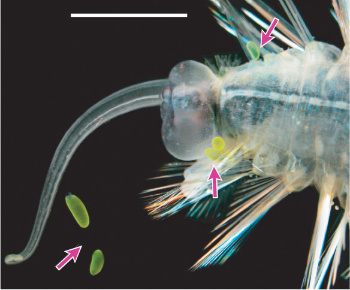
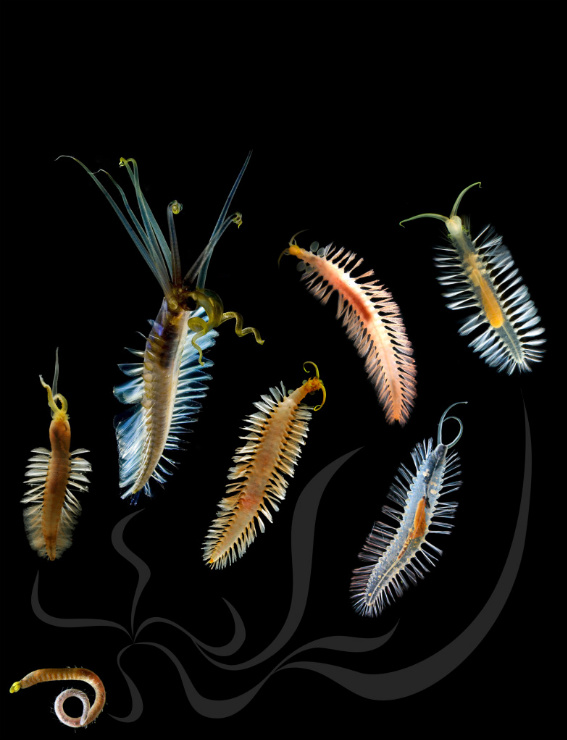
Or perhaps more appropriately have the bomb. Osborn et al. report in Science seven previously unknown species (0.7 to 3.6 inches) of annelid worms hailing from the deep pelagic (>1800m). All the new species form a distinctive group within the Cirratuliformia, a recently proposed higher taxonomic group that encompases seven other groups currently recognized as families. The species here fall in the currently described Acrocirridae but appear to be fairly genetically distinct from other known cirratuliforms.
One of the really cool findings, in addition to the distinctive morphological adaptations of the group described below, is this would represent a third, and independent, invasion of the typically benthic, i.e. living in the mood ooze of the seefloor, cirratuliforms into the nice, clean pelagic realm.
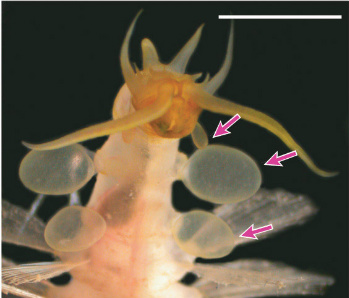
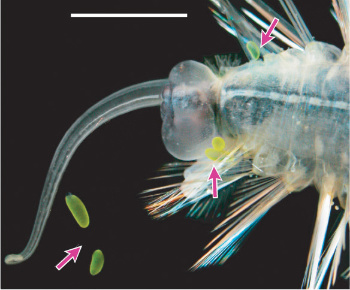
It is not just taxonomy and genes that make this group special. Scratch that. It is all taxonomy and genes that make this group special! Five of these species have pairs of oval-shaped organs evolved from branchaie, i.e. gills, that serve as green “bioluminescent bombs”. These bombs can be dropped like depth charges, releasing brilliant flashes, and speculated to ward off encroaching predators. The presence of smaller B-Bombs are thought to imply that these species can regenerate them as needed.
Note we here at DSN also are deeply offended by the statement of Oregon Environmental News that “Worms usually aren’t that flamboyant.”. Apparently someone has never taken a real look at the polychaetes (here, here, here, here, here, here, here, here, here, here, here, here) . Video of these species are below the fold.
Osborn, K., Haddock, S., Pleijel, F., Madin, L., & Rouse, G. (2009). Deep-Sea, Swimming Worms with Luminescent “Bombs” Science, 325 (5943), 964-964 DOI: 10.1126/science.1172488
Hat tip to Ed Yong who apparently has some professional-science-writer-back-door-access combined with I-have an-award-winning-smile that allows him to scoop us on this story and have access to video

Purely awesome!
Mesmerizing!