The Morbidity and Mortality Weekly Report put out by the Centers for Disease Control makes for fascinating reading sometimes. One came out recently that contains three startling case reports linked to clam beds on the US east coast, but they do not involve, as you might expect, infectious diseases. In the first case a member of the public in Delaware had paved a driveway with a load of crushed clam shells and subsequently found a mysterious object protruding from the surface. The U.S. Air Force Explosive Ordnance Disposal (EOD) squad were called to remove the object, which appeared to be an artillery shell of some sort, and during transport to the Air Force base it oozed a black substance. Two members of the EOD team later developed yellow blisters and one of the team had to be hospitalised. In the second case, clam fishermen off Long Island NY dredged up several similar shells and as they went to dump them back in the ocean dropped one on the deck and were exposed the dark liquid inside. Two of the fishermen developed blisters and were treated in hospital In the third case, one of these artillery shells showed up among shells of the more clammy variety at a clam processing plant in DE; thankfully in that case no one was exposed.
Img: Munitions at Sea, click for more
It turns out that all three of these cases involved munitions containing liquid sulfur mustard, commonly known as mustard gas. Sulfur mustard is a very unpleasant chemical listed on Schedule 1 of the Chemical Weapons Convention, which means that it has no purpose in society other than as a chemical weapons agent. Sulfur mustard, which is mustard by name only and is actually a clear to brown liquid that sometimes smells of onions or garlic, is a potent blistering agent. Supposedly the blisters are excruciatingly painful. It’s very fat soluble and is easily absorbed into the skin, but it takes time for symptoms to develop so it is often too late to treat the exposure site with any kind of neutralising agent until it is too late. It’s generally not designed to kill, but to debilitate and cause enough suffering to be useful as an “area denial” tool. As if that wasn’t bad enough, sulfur mustard also damages DNA and is a serious carcinogen. Nice.
So what the heck is mustard gas doing in clam beds of the US northeast? Well it turns out we put them there, and by “we” I mean the US Government through its armed forces, which prior to 1970 (when it became illegal) disposed of many unwanted munitions at sea, including both conventional and chemical varieties. Chemical weapons were disposed of in the post-WWII, pre-1970 era at over 25 sites off 11 states on both US coasts, but the location of many of the sites is unfortunately lost to history (or perhaps “deliberately forgotten” to keep them secret and prevent people from actively seeking them out for nefarious purposes). One presumes that there is at least one such disposal site off Delaware and another off Long Island!
So the next time you are thinking about raking or tonging some clams and you pull up something that looks suspiciously man made or remotely artillery-like, do yourself a favour and BACK AWAY FROM THE MUSTARD GAS. You’ll be glad you did.
Dr Craig discussed this issue at DSN twice before (once, twice) WAY back in 2007, and Kevin Z talked about a similar case in Boston. Great minds think alike :)
It’s just not fair. There I was, a freshly produced sand tiger shark embryo, developing nicely and making my way down the ovarian ducts to one horn of the uterus. I had blastulated like a boss, totally owned gastrulation and even did a half decent impersonation of ontogeny recapitulating phylogeny. Things were looking good. Head: one, at opposite end to tail – check. Fins, paired appropriately on the bottom, tandem along the top – check. Gills – check. Teeth – check. Aww yeah, now we’re cooking. Those menhaden aren’t going to know what hit ‘em. Yessiree bob, I am one bad motor scooter. I’m cruising along, feeling fine, make a quick right turn into the uterus and then BAM! Totally nailed by another sand tiger embryo! Right. In. The. Face. I’m like “Where’d YOU come from” and he was like “You didn’t think your dad was the ONLY one nailing yo Mama did you? Oh wait, she’s my Mama too. Well never mind, you get the point. This here uterus is MINE” And I was like “Yeah man, but don’t taste me bro!” and he was like “Can’t talk…eating”. And then things went kinda dark. What’s up with that?
Disappointed
Dear Disappointed,
Awwww, fall prey to a little intra-uterine predation did we? Dear me, how sad. Want me to put an Elmo band-aid on your dismembered corpse? Welcome to the big leagues kid, sucks to be you. News flash – life ain’t fair and you are not a winner just for showing up. In fact, a lot of the time you don’t even GET to show up. Did you think this would be like Glee, that they would allow you all to reach the peak of your pubescent glory before everybody holds hands and sings a bunch of songs that they are way to young to possibly remember? Er, no. Sorry bub. Sometimes the war is over before it even begins. Nature red in tooth and claw doesn’t start at birth, it starts BEFORE birth and you, my friend, just got schooled. Why did this happen you ask? Well, you see your Mum…hmmmm, how do I say this? She get’s around. Crazy for claspers, capisce? Your Dad? Nothing special, one of many. That means your fallopian flat mates are your half siblings at best, which in turn means most of them, from a selective perspective, have a vested interest in seeing you dead. But wait, there’s more – they also get to cannibalistically derive sustenance by eating your puny (but ever so soft and tasty) little body. No, the sand tiger uterus is not like Glee, it’s more like The Highlander (or for you Gleeker-types: The Hunger Games): it’s not uter-US, it’s uter-ME, and there can be, only ONE! Only one pup – presumably the fittest – and only one dad. If it helps, try to think of your pathetic existence as having served a useful purpose, as an important cog in the great process of natural selection. That’s total BS, but maybe you’ll quit bugging me with your blubbery sob story.
People come up with all sorts of wacky ideas to explore the oceans. And here is another one of those ideas. Meet the Polar Pod, a manned research platform dreamed up by French Explorer/Physician Jean-Louis Etienne to drift around Antarctica in the Southern Ocean. My first thought when I saw this concept was WTF. But upon further inspection, I became intrigued.
Modeled after Scripp’s R/P FLIP, the Polar Pod is a floating stick with a giant weight at the bottom to keep it ballasted and upright so the living quarters that are stuck on top don’t tilt into the ocean (this FLIP don’t FLOP). When FLIP is upright, it is a super stable platform is almost completely unaffected by waves. The Polar Pod is a little different, as it has an open frame, making it more susceptible to wave action. Even so, the designers think it will still be pretty stable, only swaying as much as 5 degrees making it nearly seasickness proof. And this is perfect, because Explorer Etienne wants to set this thing adrift in the Southern Ocean, circling Antarctica via the massive current that flow around it, the Antarctic Circumpolar Current.
As I said before, I’ve been somewhat fascinated by this entire concept since I first learned about it. Mostly because it really made me think of the feasibility of such an experiment. So let’s start on a positive note, the cons of this project:
1. The Southern Ocean can be nuts. Massive winds, waves and not to mention icebergs make it a sane mariners nightmare (bah, who am I kidding. No dedicated mariner is completely sane). If they can manage to stay afloat for an entire year, then kudos to them.
2. They plan to use the platform to observe the Southern Ocean. Getting oceanographic data in the Southern Ocean is hard. The window of ‘good’ weather is small so ships don’t go there to take data during certain times of the year. But the Polar Pod will be there! And maybe what they observe will help to fill the gaps in our scientific knowledge.
3. Power. When scientists themselves aren’t exploring the Southern Ocean in ships, they are sending all sorts of autonomous oceanographic robots down there to explore it. But these things are run on batteries, and batteries don’t have a lot of power. Whatever instruments are mounted on these autonomous samplers need to sip power. And the number of instruments that do this are limited. But hopefully for all of those onboard, the Polar Pod will have a bigger power generator. This means MOAR POWER and MOAR INSTRUMENTS! Even fancier, you could even power satellite internet. Send all that data back to us scientists on shore and simultaneously Skype with all your friends back home.
4. Instrumentation. The underwater spar can be rigged up with all sorts of instruments. Get profiles of water velocity with high-powered ADCP current meters, sure. String of CTD’s down the side, yes please! Drop turbulence profiler off the side, OUI! And for good measure, slap a meteorological station on the top.
Now for the cons:
1. The Southern Ocean can be nuts. Who is going to rescue them if they run into trouble? And how is a freely drifting ship going to avoid ice bergs? What if hits one of those pesky ice bergs?
2. Supplies. Both food and fuel will have to resupplied via boat, which is a sort of nutty idea. From talking to people that have been on FLIP, moving anything from a small boat that is going up and down with the waves to a platform that is not moving at all is a potentially stupid dangerous situation. I can’t even imagine what it would be like in the Southern Ocean swell. But from what I can gather, is seems as though everything will be done by winch from the ends of it’s wings, which may make it a lot easier.
3. A proposed oceanographic research platform with no science plan (that I can find). Is this guy for real? You can’t tout your new multimillion euro vessel as a oceanographic research platform and have no science plan *pulls hair out in frustration*. But then again, his plan could be that this is a ship of opportunity for scientists who will then dictate what can and can’t be done.
Anyway, I am curious to see what will happen with this project. It may never materialize. But at least it got me thinking of all the expensive shit I could drop into the Southern Ocean.
For the francophones or those that just like pretty animations, the Polar Pod video.
Sorry for the silence of late, just spinning a few too many plates. One of those plates was an invited lecture in the STEM lecture series at University of Texas PanAmerican. They just posted it on their website. It’s kind of long, over 50 minutes, but if you’re interested in whale sharks and procrastinating this fine Friday, I offer it for your enjoyment:
They say, “A picture is worth a thousand words.” As cliche as it is, that phrase could not resonate more clearly for this visual learner than when I am flipping through a 10 lb. biology textbook full of thousands of words. I can read through pages and pages describing some ecological process or critter life cycle and be completely bogged down until, I hit the magical beacon of hope that brings it all together. An illustration. The same holds true for magazines, aquarium signage, field guides and I.D. books. Sometimes (dare I say usually)… the picture can tell you so much more. If done properly, it can completely transform a difficult idea into a simple and easily communicated concept.
Often, as scientists, I think we take these helpful diagrams for granted. Where do they even come from?! My first thought was little science minions, like Despicable Me status, locked up in some room at the publishing company being forced to draw out figure after textbook figure. But, that seemed to simple and obvious a conclusion. So I went looking and I found one. Not a minion (though that would be awesome), but a scientific illustrator.
Amadeo Bachar is a freelance science illustrator and fine artist. He teaches digital illustration at the Science Illustration program at California State University, Monterey Bay. I actually met Amadeo a couple years back at a Fishing Expo and was so struck by the detail of his artwork that I knew he would be the perfect person to talk to when it came to learning more about the unique art that is biological illustration.
Alex Warneke (AW): So Amadeo, you are a biological illustrator, what exactly does that mean?
Amadeo: I guess I would consider myself more of an illustrator that carries a large quiver of illustration techniques. One being biological illustration or in more general terms, science illustration. This requires a keen sense for accuracy in subject matter and a basic to intermediate understanding of all facets of science from nano-technology to astronomy. Most of the time my goal is to make a particular science accessible and understandable through illustration to the general public
AW: Was this always what you wanted to do?
Amadeo: I didn’t really know what I wanted to do. I knew in junior college that I did not want to be an artist in the traditional sense. I knew after a BS in marine biology that I did not want to be a researcher/scientist. After a couple years building up my portfolio I decided that science illustration was a good way to blend the two together and follow some paths a little less traveled.
Source: A. Bachar
AW: Who are the types of groups that you work for?
Amadeo: Universities (CSUMB, UCSD, Stanford, Harvard), magazines (National Geographic, Scientific American), research groups (MBARI, Seafloor Mapping Lab), state and county funded outreach and education, etc..
AW: No doubt that natural talent plays a huge role in this type of career path, I mean I can draw a pretty mean stick fish myself, but is there more professional education/training that is needed?
Amadeo: The program I teach part time in at CSUMB is a good start. The program teaches students sound technical skills, tricks of the trade and good business chops.
Source: A.Bachar
AW: When creating a piece to be placed in a field guide or at an aquarium. Is there a line between being artistic and being realistic?
Amadeo: Just so long you are accurately representing the critter, you can be as artistic as you want. In other words, it’s ok to see brush strokes or pencil lines just so long those marks don’t mis-represent the anatomy of the subject that the illustration is intended to display.
AW: Along that same trend, how do you “study up”? I would probably just watch hours and hours of “Finding Nemo,” but I imagine it’s a bit more involved than that, getting all of those important details just right.
Amadeo: For my marine work, lots of diving and taking pictures. For different clients, It’s like studying for a test. Request as much material related to the illustration and read up, learn it and after digesting it craft it into a visual that accurately says it all simply and clearly.
AW: Could you briefly take us through the process of creating a piece from start to finish?
Amadeo: Research, research, research, sketches, research, sketches… haha Ok, you get the idea. Research takes a big part of the process, It is the foundation. Your illustration is only going to be as good as the references you have and those references are collected and understood through research. After this it comes down to making rough sketches outlining critters, form and general composition. From there, revisions are usually requested by the client and then I move on to rendering in whatever medium is best suited for the distribution of the illustration. Is it web, is it magazine, is it both plus merchandising, etc… Once this has been decided I start the final rendering of the subject.
AW: Personally, when I am doing some hard-core lab work, I bust out the Billboard Top 100 playlist. Do you have a go to mixed tape when you are working?
Amadeo: Sci-fi movie director commentary, TED talks, Sports documentaries and a couple Pandora stations usually do the trick as good working noise.
AW: Dual question. What is the best illustration you have ever done? And on the other side of the pillow, the hardest one you have completed?
Source: A. Bachar
Amadeo: The best illustration is always the next illustration. Things are so rushed sometimes, so I seldom get to output a perfect work. Heck, even when I have time I don’t come close to perfection, so I guess that’s just an excuse. Illustrating comes pretty easy to me. The hard part in the process in a small handful of instances is the client. Because it’s a team effort, it takes good communication between client and illustrator to make the process go smoothly. However, as always, it’s a two way street, so I try to be very aware understanding what they want and managing communication if I sense there is a breakdown.
AW: Inverts or Vertebrates?
Amadeo: Are both delicious? … ok, inverts.
AW: Who is your role model or if you don’t have one, what inspires you?
Amadeo: My daughter, wife, friends, colleagues, students are my role models. Along with them, inspiration from my work comes from the amazing complexity yet simplicity of the natural world.
AW: As scientists, we geek out over new fangled technology (*Cough* Cough* Dr. Martini *Cough*). How has technology played a part in your line of work?
Amadeo: It’s played a huge part. You cannot succeed as an illustrator if you are not competent in using digital painting, production and post production programs. It’s also played a role on the research end. As the sciences develop new technology, they are essentially creating better eyes, ears, senses. The imagery and data from these measurements really make illustrations better, more accurate and easier to understand.
Source: A. Bachar
AW: You now teach courses on biological illustration at California State University Monterey Bay, can give us a bit of the 411 on that program?
Amadeo: The Science Illustration Program is a single cohort program that lasts three quarters. Students learn and hone traditional and digital techniques in classes ranging from field sketching to zoological illustration covering assignments from intracellular diagrams to animations. Along with this, completing an internship is a requirement for graduation, our students really come out with a sound foundation in science illustration. Just this year alone, we have students interning at National Geographic, Smithsonian and MBARI to name a few.
Side note: For those interested in CSUMB’s Scientific Illustration Program: Discover more here.
AW: What is the number one piece of advice you give your students?
Amadeo: As I mentioned before, your illustration will only be as good as the references you have, so do sound research, ask questions and find good references.
AW: Amadeo. It has been real. Thanks for taking the time to chit chat and share with us a little piece of your world.
For more information on Amadeo’s work as an artist and illustrator, please visit www.abachar.com
Love, love, love, love this video. Marine scientist Cassandra Brooks strapped a camera to the front of NSF’s icebreaker the Nathaniel B. Palmer as it sailed for two months through the ice-choked Ross Sea off Antartica. But unlike her, you don’t have to sit through two-months of ice smashing while fighting your shipmates for the last fresh vegetable to enjoy the Southern Ocean. She has condensed the voyage into a fascinating 5-minute time lapse. The stunning visuals combined with her wonderfully uncluttered narration is just perfect. Great descriptions of sea ice (WOOT!) and penguins that are really frickin’ cute at artificially high speeds.
Want more sea ice and Antarctica? Brooks blogged about being a scientist aboard an ice breaker at National Geographic. Also includes some interesting history of Antarctic exploration. http://newswatch.nationalgeographic.com/author/cbrooks/
COMPASS recently published a commentary in PLOS Biology on the journey from science outreach to meaningful engagement. This post attempts to synthesize a series of reactions, reflections, and personal experiences that followed with the hope to expand the conversation. Read the summary post here, or track the conversation by searching for #reachingoutsci
Scientists are under increasing pressure to produce as many publications as possible in ‘‘high-impact’’ journals to raise their profile among peers and influence their discipline.
The statement greatly simplifies the complexity of the modern day academic scientist and the pressure we feel. The demand on our time requires we first and foremost publish, both the number and the impact matter. We must write and ultimately receive grants to both maintain our research (to produce more papers) and keep grant funds flowing though our departments and universities. Depending on the institution, we may also be required to teach and mentor students, and potentially do it well, and provide service to the school in the form of committees. Of course part of the investment in mentoring is to ultimately increase our own research output. These are the direct demands on our time that directly influence our careers. This is the formula for success in traditional faculty positions. As Simon Donner, a professor of geography, notes at his blog marbo, it is something faculty think about constantly. We worry if we can keep it up.
in recent years, another measure of significance also has been on the rise—one that focuses on a scientist’s reach beyond their field and captures societal impact.
Within the last decade, an increasing pressure has risen to reach outward from academia to engage new audiences, including the ones that often fund our research through taxes. Currently, the number of scientists connecting with public seams great, despite it not figuring into the formula for success. Indeed this new demand on our time, largely from outside of academia, may and often conflicts with the formula. At the end of day, after we have taught, collected data, wrote papers and grants, met with students, set through an hour long faculty meeting or two, managed a lab, we are now expected to fit outreach activities into our finite day.
And herein lies the interesting juxtapose, in which we could be successful scientists without outreach yet so many of us choose to do it anyway. In the 8-year life of Deep-Sea News, I estimated that I have dedicated 4,500 hours of my time—the equivalent of 2.25 years worth of 40-hour workweeks. This lack of time is combined with the fear of they who monitor the formula and hold “ultimate power over careers and [is] adamantly opposed to scientists spending time on outreach, rather than research.”
Why do we do it?
One, we believe that it is our duty. As Jane Lubchenco, marine ecologist and former Under Secretary of Commerce for Oceans and Atmosphere and Administrator of the US National Oceanic and Atmospheric Administration, stated we have a social contract and responsibility to share our scientific findings with society for both a general increase in free knowledge but for direct application to societal problems. And in something that dangerously approaches the scientific taboo of advocacy, yes we want to influence policy. Ultimately, we do care about the world around us. To draw upon Alan Townsend’s vision, we are part of society with our own toolkit to offer. “How do we sustainably harness humanity’s extraordinary capacity for unity and positive change before things truly hit the fan?
Second, we believe that it may actually figure into the formula. Through outreach we may indirectly, and hopefully directly, increase the impact of our publications, ensure greater grant opportunities and funding, attract the attention of promising students, and benefit our formal teaching.
Of course, many critical questions remained unanswered. Those few have tried to address them have often done so uncritically, i.e. that outreach is de facto a good thing. Those few who have tried to analytically address them often obtain unfulfilling or mixed results.
For example, a link is commonly made between the number of Tweets about a paper has and a more traditional measure of impact, it’s citation count. First there are limited studies of this relationship incorporating too few disciplines and too few papers. Even studies that examine this the correlations are weak and often do not account for other factors. Last, even in the best cases we do not know the direction of causality. They are still correlations. Perhaps impactful papers are more likely to grab Tweet early and citations later with no relation between the two other than the paper itself?
So, to me, it seems we still have no idea of:
How many scientists actually engage in outreach to the public? (And we need to be careful with this one, as it is different than inreach to the scientific community through social media, i.e. a blog on phylogenetic methods or using Twitter to increase your virtual department). Is this percentage of the community adequate? Should we stop encouraging scientists to engage in outreach and turn our attention elsewhere?
How do we measure the impact of our public outreach? What is success? Are we achieving it? (And again we need to ensure the metrics are appropriate, we are scientist communicators not science communicators)
With the formula constraints on our time, how do we conduct outreach efficiently?
Does public outreach really impact the formula directly? And across science, how many of our colleagues and institutions are really beginning to count outreach in the formula.
We’re scientists, why not be scientific about outreach. Be systematic. Do research on the role of scientists in society. Evaluate different methods and assumptions. And when the time comes, be precise.
In a new PLoS Biology paper from Smith and colleagues trace the trajectory of outreach through COMPASS, a non-profit founded to bridge the gap between ocean scientists and the media. They begin to outline lessons learned from over a decade of work:
the need for an evolving approach;
systematic support of scientists willing to do outreach;
a committed group toward practice and preparation;
the deficit model (the public just needs more information) is dead;
understanding and connecting with audiences;
scientists should be given the opportunity to determine their key messages, not have them determined for them;
we need more training and opportunity for scientists;
and of course that academia needs to readjust the formula.
I agree with most of these, but I believe more critical thought is required of number seven. Are we simply operating on the deficit model when regard to scientists and outreach? Zen Faulkes suggests, at least with reference to graduate student, more training may not be the answer or even that easy. Yet, “alternative” careers, non-tenured track faculty positions, are the normative now. In 2006, only 15% of Ph.D.’s were found in these traditional positions. Offering alternative skills sets to scientists will make them only more competitive in these alternative career paths. However, I am concerned that those trained to do outreach well, will leave, as it provides a venue of escape from the formula.
I began outlining my ideas this post after I read the COMPASSpaper but before I read the other fantastic commentaries on the paper and outreach in general. I am amazed how much these other scientists echoed my own ideas about the want, no the need, to do outreach but facing the wall of the formula. For example James Cloern begins his piece with “Like most research scientists I struggle with the challenge of how to allocate limited time. How much do we spend on research vs. other activities, and how much on each of the problems we want to tackle?” Allthese posts also echo another and powerful idea, we are long past the time for a new formula. Chris Buddle has the new formula. But any new formula requires much better answers to outstanding questions regarding the role of scientists in outreach.
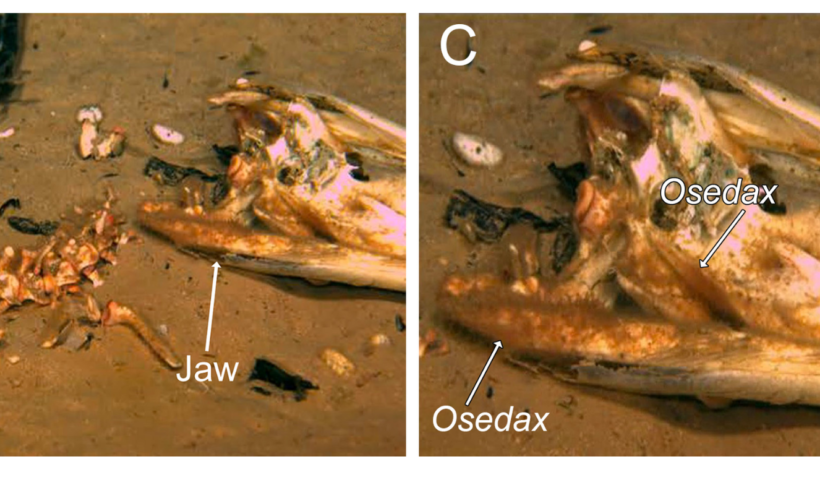
The deep-sea Osedax bone-devouring worms could easily have been the poster child for Deep-Sea News instead of the Giant Squid.
Below is list of 10 reasons why Osedax are the shiznit.
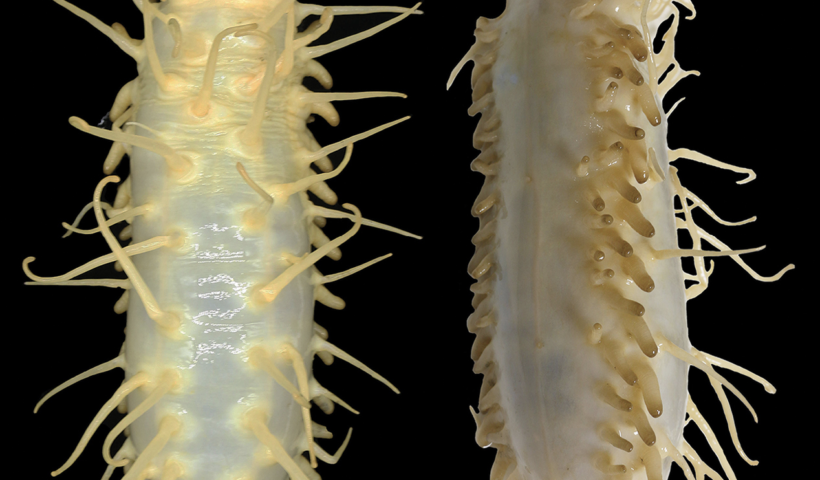
The chicas are freaky. All whalebone-eating, female worms have dwarf males, up to 114 in Osedax rubiplumus, fruiting around inside of their body. The whole thing is akin to an internal sperm fest with the female enthralled in her detestable orgy, covered in the love ooze of her harem. And the larger, older ladies have larger harems. Everyone loves a cougar.
Dwarf males ejaculate from the tops of their heads….don’t know what else to say about this but there you have it.
It’s not Osedax but Osedaxes, or Osedaxi, or whatever the hell it is. The point is that there are half a dozen to a dozen species. Imagine learning there are zombie humans, zombie dogs, zombie cats, zombie cows, zombie houseflies, zombie rats, and so on except instead of feeding on brains they prefer your bones. Only time will tell if Osedax crawl out of the ocean and consume us all.
Osedax is Latin for “bone devourer”. Not quite accurate as they don’t feed on the actual carbonated hydroxyapatite, i.e. bone mineral, but rather the fats within the bone matrix. What’s not to love about these wee beasties that live off the lipids stored in bones of long-dead whales lying on the seafloor?
Osedax are worms with roots. The females extend roots into the bones to tap into these lipid reserves. Just like BP drilling for oil in Gulf of Mexico except without the spills.
Osedax are little snot flowers. With roots to delve into the bone, a trunk full of males, and a crown of reparatory organs extending from the trunk, these little soft sacks resemble snotty little flowers. Perhaps that’s why the first named species got the Latin name of Osedax mucofloris, literally bone devouring mucus flower.
Osedax have no mouth, anus, or gut. The just absorb dead whale parts their roots…by using acid.
Thousands of bone-eating females will infest a whale carcass. So many will accumulate the whale bones will appear to be covered in circa 1970’s red shag rug. A rug that eats bones, has harems, and secretes acids but otherwise a normal shag rug.
Can you smell that? Despite being spring it smells just a little less green. Indeed, there is a little less green around me. Sure the plants around me in North Carolina are in full emerald plumage. However the green that really matters—dollars, money, cash, currency, dough, bread, Benjamins, dough, bank, cabbage, chedda, dead presidents, folding stuff, scratch—is nowhere around. The sequester reduced the National Science Foundation’s budget meaning 1,000 fewer funded grants in 2013. Of course, with funding rates at 5-10% before the sequester with essentially NSF’s decade long frozen budget in the face of rising costs of salaries and supplies did not exactly mean that NSF was raining money on scientists before.
So I’m looking for a deal and if Fisher Scientific or VWR did double coupon Tuesdays I wouldn’t have time to write this article. Stealing a research ship doesn’t seem to be a totally terrible idea. If I could afford a graduate student and could convince them to swim to the depths, my ROV problem would be solved. However, I still need a stereomicroscope (my undergraduate’s arms eventually get tired of holding multiple magnifying glasses).
Why won’t you let me afford you, Zeiss?
What I really want is a Zeiss Stemi 2000C. The optics are the Bentley of microscopes. The smooth sliding action on the magnification and focus knobs is butter, no eating butter inside of Bentley. But the $5,640 pricetag is 10x my current budget. But, this is the kind of scope that causes a nerdgasm just from touching it. And I do want a nerdgasm. Unfortunately there is no thriftshop for used Zeiss, or any other, microscopes. Off to search the might Internet!
So how equivalent is it? Well, the Amscope website is not nearly as polished as the Zeiss website. This gave me pause. On the other hand maybe they don’t pay some web developer and pass those savings along to the customers! The Amscope SM-1TZ appears to have everything I need. What is the quality of a $440 scope? Do I order it?
I ordered it.
At $440, I had exceedingly low expectations. I agonized that I might get exactly what I paid for. The day the box arrived with scope, I thought I had made a tragic mistake. The shipping box was that cheap, thin cardboard that you typically find containing ceramic coffee mugs made in China. This did not instill hope. I opened the box carefully worried that even the slightest movement would break this cheap piece of shit.
I was surprised.
My new friend
What I found inside was not a cheap piece of shit stereomicroscope. I found a solidly built instrument. The parts are all metal and fit together well. The optics, while not the magical quality of a Zeiss, produce a nice magnification and image. The plane of focus is amazingly broad. The 0.5x wide magnification len is perfect for sorting bulk sediment samples. My only complaint after two solid weeks of working with the scope is 1) the focus knob’s motion is a little rough (TWSS) and 2) adjustment of the width of the eyepieces is awkward. With regard to the eyepieces the width is adjusted through rotating them on their pivot point which occurs at their bottom. This is reverse most scopes that swivel on their uppers. Not necessarily a problem but it will require some behavior modification on my part. Given the price and sturdiness of the Amscope it would be a great purchase for a field or vessel operations.
So yes you can buy a decent scope for $440.
This sequester can f’ off!
UPDATE: Note my new baby has a nice camera tube. Assuming I don’t have a digital camera, do you have recommendations on the best budget camera and/or adapter?
Mariners have a long-standing tradition of naming their vessels after the ladies. However, when it comes to research vessels this has not been the case…until now.
For the first time, a research ship will be named after a woman. The Navy’s next ocean-class auxiliary general oceanographic research (AGOR) will be named after Sally Ride, the first female American astronaut in space. She truly was a queen of science. After multiple missons to space, she followed it up with a distinguished career which included being a physics professor at UCSD, director of the California Space Institute, writer of children’s science books, and a co-founder of Sally Ride Science.
Sally Ride. Clearly she is mesmerized by earth’s ocean eddies from space.
When I first read the new vessel was going to be named after Dr. Ride, I was stoked. But I was also surprised that this was the first U.S. research ship to be named after a woman. Taking a peek at the University-National Oceanographic Laboratory System (UNOLS) fleet, the organization that coordinates the US Academic and National Laboratory Maritime Fleet, we find that boats are named after capes, towns, birds, fish, copepods, and of course, famous male Oceanographers*.
If you break down the research vessel names by gender, you find that 41% are named after males, 55% have a gender neutral name** and 4% have a female name.*** From the list of all US research ships, only 13 out of 248 ships or 5% are named after women. It’s pretty clear the academic research ship community has chosen not to follow the tradition of naming its ships after women.
According to the department of defense press release, “Traditionally, AGORs are named for nationally recognized names in exploration and science.” So why no women until now? You could argue that historically, there were fewer women in science and important leadership positions. It could be that there are too few ships and too many important male names that haven’t been recognized either. These could be factors, but I will also argue that the lack of ships named after females is symptomatic of women’s unrecognized contributions to science and a subtle, if not necessarily intentional, gender bias. And let’s not get me started on the fact that all these dudes with ships named after them are old and white…
The lack of recognition for women scientists also bleeds over into other areas of science as well. For example, here is the gender breakdown of the winners of prestigious physical oceanography awards ****.
The Oceanography Society: Walter Munk Award: 10 medals, 0 female recipient.
How do we change the gender and color of science achievement? Nominate to gain visibility. This could be as big as submitting an application for one of the prizes above, or merely an invitation to give a departmental talk. Spend some time and examine the achievements of your scientific cohort and make a short but intentionally diverse mental list of people that have made new, exciting and/or important contributions. This way you can always bring a new and diverse name to the nomination table.
So back to the lady ships of the sea. Which female scientist would you name a research ship after? Because it really is time for an R/V Lubchenco, McNutt, Earle or Tharpe .
FOOTNOTES:
* The ship names listed here were pulled from the UNOLS site and the websites of academic institutions. This list is not an complete list of academic research ships in the US. If you know of others, feel free to note it in the comments!
**Some of the neutral entries such as Calanus and Cape Henlopen are derived from male names, but it’s unclear whether the vessels are specifically named after males rather than things named after males.
***There is one other ship with a female name, the R/V Urraca. It is a women’s name in spanish and also means magpie. Whether it was specifically named after a woman is unclear, but I put it in the female category anyway.
**** Several of these awards are not strictly for physical oceanographers. See links for full-descriptions.
Recent Comments